After reading Act III of William Shakespeare’s Othello, another major theme within the
play became apparent. The majority of the problems and actions that take place
within the story have the root cause of jealousy. Overall, the reason Iago is
lying to everyone about everyone is because he is jealous of Cassio and Othello
as well. In his mind, Cassio took his rightful position and Othello took his
wife. Because of the jealousy he feels towards those two men, Iago makes it his
goal to disgrace and ruin them. However, in Act III of the play, Othello states
to Iago, “Within these three days let me hear thee say that Cassio’s not alive,”
(Shakespeare 1419). Because Othello believes Cassio is sleeping with his wife,
he gets jealous and in turn plots to kill Cassio. Othello’s anger and actions
are ironic though because first of all, the reader still does not know whether
he slept with Iago’s wife or not, which would make him a hypocrite, and second
of all, because there is really nothing going on between Cassio and Othello’s
wife Desdemona. Iago’s response to his jealous actually inspires jealousy in
the others he interacted with, creating unnecessary drama and conflict. Because
of the theme of jealousy within this story, Iago is able to successfully get
his wish of slowly destroying Cassio and Othello.
Wednesday, February 6, 2013

Appearance vs. Reality: Shakespeare's Othello
 A theme that becomes apparent in the first three acts of
William Shakespeare’s Othello is the idea of appearance versus reality. In
these acts, it seems as though the way all the other characters view one
character is the exact opposite of the truth. While Iago, the antagonist of the
story, is constantly praised as an honorable man, Othello, the protagonist of
the story, is often questioned or thought to be disgraceful. The separation between
reality and the way things appear is what pushes the story forward. Because
Iago wants to get rid of Othello, he decides to go about it by ruining the
lives of multiple other characters. While in reality he is a good person, Cassio
is made out to look like a raging drunk after Othello’s wife. To convince him
of Cassio’s treachery, Iago says to Othello, “But such a handkerchief – I am
sure it was your wife’s – did I today see Cassio wipe his beard with,”
(Shakespeare, 1418). While everyone else is losing their trust in each other
and the officers they had put their faith in, they remain in respect of honest
Iago. However, behind it all, Iago is the one tearing everyone’s lives apart
and manipulating their feelings and actions. In this play, the one person who
is remains a respected person is the one person who does not deserve any
respect at all.
A theme that becomes apparent in the first three acts of
William Shakespeare’s Othello is the idea of appearance versus reality. In
these acts, it seems as though the way all the other characters view one
character is the exact opposite of the truth. While Iago, the antagonist of the
story, is constantly praised as an honorable man, Othello, the protagonist of
the story, is often questioned or thought to be disgraceful. The separation between
reality and the way things appear is what pushes the story forward. Because
Iago wants to get rid of Othello, he decides to go about it by ruining the
lives of multiple other characters. While in reality he is a good person, Cassio
is made out to look like a raging drunk after Othello’s wife. To convince him
of Cassio’s treachery, Iago says to Othello, “But such a handkerchief – I am
sure it was your wife’s – did I today see Cassio wipe his beard with,”
(Shakespeare, 1418). While everyone else is losing their trust in each other
and the officers they had put their faith in, they remain in respect of honest
Iago. However, behind it all, Iago is the one tearing everyone’s lives apart
and manipulating their feelings and actions. In this play, the one person who
is remains a respected person is the one person who does not deserve any
respect at all.Othello's Time Period: Men vs. Women
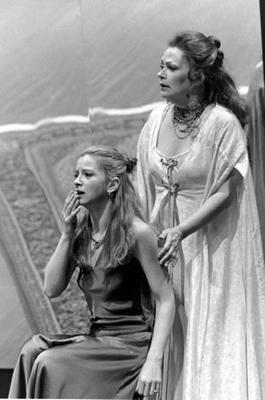 Act II of William Shakespeare’s Othello introduces the reader to the drastically different roles of men and women in marriage. The two couples mentioned are Iago and Emilia and Othello and Desdemona, and while Othello treats Desdemona much better than Iago treats Emilia, they are still not shown much respect. Othello complains constantly about his wife, especially how she talks too much. During this time, it was expected of wives to take care of the household, have children, and keep quiet. Apparently, Emilia talks to Iago, which upsets him. While complaining to Cassio about her, Iago states, “would she give you so much of her lips as of her tongue she oft bestows on me, you’d have enough,” (Shakespeare, 1385). Iago just wanted a wife who would do as told and keep to herself, and Emilia’s talking does not satisfy that wish of his. Furthermore, Emilia understands that Iago thinks nothing of her. When asked whether he could say something kind or good about her, Iago claims that he could not. Desdemona is even affected by Iago’s disrespect for women when he claims that he will not say anything about her because he is too critical. Iago then goes into a description of all different types of women and how he would treat them, and Iago is still critical and obtuse. Through Iago’s treatment of both his wife and Desdemona, Shakespeare effectively portrays the disrespect shown towards women during the time period of his play.
Iago's Revenge: Othello, Act I-II

After reading Act I of William Shakespeare’s Othello, the reader is introduced to the major conflict of the play. Iago, an ensign to a captain named Othello, is angry over the fact that another man, Michael Cassio, attained the position of Lieutenant, or second in command, over himself. This anger towards Othello’s decision is what fuels the plot line as the story continues. While Iago probably did deserve the position over Cassio as he had more battle experience, Iago goes too far and decides to gain revenge on Othello. Iago, in hopes of vengeance, begins to set up different situations and lies in order to disgrace Othello or cause confusion. Even as one reads into Act II, Iago’s lies are what run the story. The conflict that he creates, whether stating that Othello kidnapped Desdemona or trying to create an affair between her and Cassio, is what slowly starts to whither away at each character’s respect and liability. Furthermore, Iago is after Othello because of a rumor he slept with his wife. However, Iago’s unreasonableness shines through when it is realized that he does not actually know whether it happened or not. Iago states, “And it is thought abroad that ‘twixt my sheets he’s done my office. I know not if’t be true,” (Shakespeare, 1382). Fueled by his anger over his military position, Iago chooses to slowly attack Othello through lies and the people around him.
Sunday, January 27, 2013
"Getting Out" by Cleopatra Mathis
After reading Cleopatra Mathis’ poem, “Getting out,” the
title relates to the poem and its topic quite well. While the end of the poem
results in a breakup between to people, the three stanzas describe the various
aspects that led to that end. Getting out if something implies a process, and that’s
exactly what Mathis’ stanzas do - describe the process of this breakup. Mathis
writes, “Every night, another refusal, the silent work of tightening the heart,”
(Mathis, 896). From this phrase, the reader can gather that, regardless of what
they did to prevent it, the couple slowly fell farther and farther apart as their
hearts tightened a bit more every day. The second stanza discusses how things
were or used to be. However, when the happiness was replaced with blame and
disagreement, things fell apart. Even at the end, when there was so little of
their relationship left, the couple in the poem was still upset to leave each
other. In today’s world, we hear so many stories about violent and detrimental
divorces which are upsetting, but the slow decline in the relationship of this
poem actually saddened me even more. It truly seems as though the people in the
poem really tried to make their relationship last, but it just was not meant to
be. The idea that regardless of whether people want their relationship to last,
it just might not, is truly the most saddening part of life represented in this
poem.
"Popular Mechanics" by Raymond Carver
After reading Raymond Carver’s short story, “Popular
Mechanics,” it became apparent how important the characters actions were to
communicate the tone to the reader. There is minimal description of any setting
within the story and the dialogue is limited, so the details Carver includes
regarding the actions of the characters contribute greatly towards the plot.
The story is focused on a couple who is splitting up, but these actions tell
the true severity and anger within their situation. Carver writes, “He did not
answer. He fastened the suitcase, put on his coat, looked around the bedroom
before turning off the light,” (Carver). Because of the man’s lack of response
and controlled behavior, it becomes obvious that the relationship between the
characters is not good. Furthermore, the fact that Carver mentions the woman wiping
her eyes shows that whatever had happened between the two, it had brought her
to tears. Lastly, the final interaction between the two people and their baby
shows the true hatred behind their relationship. Because they are so upset with
each other, both parents become detached enough to disregard their child safety
and pull him apart quite literally. While such actions are very unlikely, they
truly helped Carver portray the deep hatred within the relationship, to the
point where they would destroy their child.
Friday, January 25, 2013
"The Story of an Hour" by Kate Chopin
After reading Kate Chopin’s short story “The Story of an
Hour,” I recognized the last line of the story to be a major theme. Chopin
writes that a character in the story, Louise Mallard, died “of joy that kills,”
(Chopin, 327). The strange idea that joy could kill stood out to me after
reading of the circumstances surrounding Mrs. Mallard’s death. Because her
husband had supposedly died, Mrs. Mallard was incredibly heart broken and
upset. She began to think about her husband in Heaven and that she would get to
see him again, and the pure joy and happiness she felt over that subject caused
her death. In the real world, I believe that this does actually happen. Weeks
after a family friend died, her husband died as well. If a person loves another
enough that the thought of seeing them again brings them such joy, it, in the
end, can kill them just as it killed Mrs. Mallard. Thinking of something
unachievable or even dreaming allows a person to let go, and Mrs. Mallard let
go in Chopin’s story in order to be with her husband. However, the twist at the
end of the story - that Mallard’s husband was still alive - created a sour
ending to the story. The original idea that the two Mallards would be together
after death was comforting, but the fact that her husband was not even dead was
shocking, as Mrs. Mallard would once again be alone, this time having no way
back.
"You're Ugly, Too" by Lorrie Moore
While reading “You’re Ugly, Too,” a short story by Lorrie
Moore, one is introduced to the main character of the story, Zoë Hendricks.
Throughout the story, Moore brings out Zoë’s personality through her eccentric
behaviors and perception of certain situations. She is truly an odd character,
and in the end, I believe her eccentricities end up making her a sympathetic
character. Her interactions with others oftentimes go downhill because of a
comment she makes or something she does that is unintentionally rude or
inappropriate. In the story, she pushes Earl, a man she met at her sister’s
party, as he is leaning on the edge of a balcony. While he does not fall and is
alright, the whole action quite frankly freaks him out and he does not
understand what is wrong with Zoë. However, even though she did apologize, Zoë
does not really understand what is wrong with her actions; rather, “she smiled
at him, and wondered how she looked,” (Moore, 370). Because she misunderstands
everyday situations and how to act, she becomes a sympathetic character.
Readers feel sorry for her that she has not found love and that her students
dislike her, both of which are caused by her odd behavior. Furthermore, after
Zoë’s sister announces to her that she is getting married, Zoë begins to tell a
story to her sister about two people who fell in love, but in the end, one
committed suicide. While she chooses not to finish the story, the idea that Zoë
would first think to talk to her sister about a suicide after her engagement
announcement shows a little more of Zoë’s eccentricities. The audience feels
pity towards her that she does not understand love, furthering her role as a sympathetic
character.
Wednesday, January 9, 2013
"Delight in Disorder" by Robert Herrick
After reading “Delight in Disorder,” a poem by
Robert Herrick, the idea of “wild civility” becomes apparent. Throughout the
poem, the author praises disorder within people’s clothing – a sense of
confusion or distraction. Through this theme, the author successfully transmits
the idea that being perfect or striving for perfection is not as desirable as
it may seem. The poem shows that no one really wants a perfect person, because
it is, in fact, people’s imperfections that create the interest and intrigue
behind their personalities. The poem states, “A sweet disorder in the dress,
kindles in clothes a wantonness,” (Herrick, 979). This restates the idea that a
little disorder creates a sense of intrigue in people. Furthermore, perfection
sets a person on a pedestal above others, while a sense of disorder creates
more of a sense of accessibility to a person. It places them on the same level
as everyone else. By avoiding being buttoned-down, a person can make themselves
be more appealing to others, as a person who is not intimidating. Perfection is
not always the best thing, and Herrick’s poem proves this point.
"Lonely Hearts" by Wendy Cope
After reading Wendy Cope’s poem, “Lonely Hearts,” I could
not help but notice the prominence of all different personalities and
characteristics of people. This poem was probably one of the most realistic and
relatable poems I have read, because the characteristics of the people
mentioned within the poem are all characteristics of people I meet on a daily
basis. However, the poem also relates all of these seemingly different people
to each other. Whether a biker, a vegetarian, Jewish, bisexual, or successful,
most people all yearn for the love and care of another. By connecting all of
these various and random traits and personalities together, Cope successfully
points out one of the most universal and central desires of all people. The
poem repeats, “Can someone make my simple wish come true?” (Cope, 974). This
phrase clearly portrays the wants of people and the measures they will take to
find the love that everyone needs. While everyone is unique in their own ways,
there is also someone equally unique out there for each person. Through her
poem, Cope was able to not only connect seemingly different people; rather, she
was also able to portray the deep desires of people.
"Eveline" by James Joyce
Within James Joyce’s short story “Eveline,” the
theme of “spiritual paralysis” becomes apparent. While many places and
countries today spark hope and excitement for the future, Joyce described
Dublin within this story as a town full of people frozen into “spiritual paralysis.”
They have no hope or no expectations for things to get better, and just like
the word describes, they are paralyzed, or unable to move or change. This theme
comes to life especially for Eveline. Even though she does not have an easy
life and has been abused by her father in the past, she cannot, in the end,
bring herself to leave Dublin. The story states, “Her father was becoming old
lately, she noticed; he would miss her,” (Joyce, 220). She cannot get past the
idea of disappointing her father and straying from the norm, and it prevents
her from leaving. The city and the troubles she faces are all Eveline knows,
and she becomes too stuck in that state of security with what she knows that
she cannot escape it. She is truly spiritually paralyzed. The final expression
of spiritual paralysis within “Eveline” is at the close of the story, when she
chooses not to leave for Buenos Aires with Frank, a sailor. The uncertainty of
the future is too much, and Eveline remains in Dublin.
"How I Met My Husband" by Alice Munro
After reading Alice Munro’s short story, “How I Met
My Husband,’ I realized the effectiveness of the surprise ending in the story.
Throughout the majority of the work, the reader is under the impression that
Chris Watters, a pilot, is the husband of main character Edie. However, the
reader later discovers that the mailman Edie meets while waiting for a letter
from Chris becomes her husband. This ending was especially effective because it
allowed for a revelation. While reading the story, I was confused why Edie was
so enamored by Chris, especially because their personalities were not
compatible and he was rather forward. Edie, on the other hand, was very shy and
much younger than Chris. While waiting for Chris’ promised letter and an
explanation for Edie’s care for him, the presence of the mailman made me
realize the twist within the story. All of the dramatic events surrounding
Chris just led up to Edie meeting the mailman, who in the end turned out to be
her husband. The surprise ending was also rather inevitable. Seeing as Chris
escaped his fiancée Alice by abandoning his plane ride business, it made sense
that he would never really communicate with Edie, a girl he knew for a few
weeks, again. However, Edie’s naïveté of Chris’ true intentions allowed her to
meet her husband, as the story states, “It never crossed my mind for a long
time a letter might not come,” (Munro, 145). When she finally realizes this
fact, she is able to begin a relationship with the mailman.
Thursday, November 29, 2012
Frankenstein: The Purpose of the Frame Story
After finishing Mary Shelley’s novel Frankenstein, the distribution and unique separation of time within the novel added to the story. Initially, the novel begins with four letters that Robert Walton, an explorer, writes to his sister Margaret. Just a few pages before the book ends, we return to Walton’s point of view with the statement, “You have read this strange and terrific story, Margaret,” (Shelley, 155). However, after Walton meets Victor Frankenstein, the reader hears nothing directly related to Walton until the last few pages of the novel. Although Walton was retelling Frankenstein’s story, the entire novel takes place in a letter to Margaret. This interesting separation of events is called a frame story, or a story within a story. Shelley’s use of a frame story enabled her to form the parallelism between Frankenstein, the creature, and Robert Walton. Many similarities are present between the three characters, and the format of a frame story allowed the author to formulate these comparisons without actually requiring them to interact with each other. Furthermore, although she is never actually met, the frame story allowed for the creation and influence of Margaret. No actual response or words from her are ever read, yet her being influences Walton’s decisions and parallels Victor’s Elizabeth. Through her use of a frame story, Shelley was able to create many different aspects and connections in her novel that might have not been possible if she had followed a tradition format.
Slave v. Master: Motif
One major motif apparent in Frankenstein, a novel by Mary
Shelley, is that of a slave and his master. Throughout the majority of the
novel, there is a constant battle for power between the creator and the
creature. Initially, Victor had all of the power, as the creation was simply
and idea. However, as it became his obsession, Victor almost became a slave to
his work or to the idea of the creature. He never stopped to think about the
consequences of his actions, because the prospect of what he could do had taken
over his mind, leaving no room for reason. While Victor gained some of that
power and control back after creating the creature from the dead and bringing
him to life, but as the creature grows older and Victor loses contact with him,
the tables began to turn. As the creature became more and more angry with the
human race’s disgust and fear of him, he begins to deal with his anger by
plotting against Victor. He begins to hold the puppet strings that control
Victor’s mood, actions, and health. By murdering Henry Clerval, the creature
successfully sends Victor into depression and grave illness, while also getting
him sent to prison. By making the right, but morally wrong, decisions, the creature
is able to control Victor, just as a master controls his slave. Towards the end
of the novel, the creature even refers to Victor as a slave, commanding him to
do certain things. The creature states, “Slave, I before reasoned with you, but
you have proved yourself unworthy of my condescension,” (Shelley, 122). Not
only does the creature call Victor a slave, but he also calls him unworthy. This
change in power and role becomes quite obvious as the creature overpowers
Victor.
Wednesday, November 28, 2012
Frankenstein: Dramatic Irony
In Mary Shelley’s novel Frankenstein, a misconception about one
of the creature’s comments leads to not Victor’s downfall, but that of another.
After Victor refuses to create a female being for the creature, the creature
explodes with anger and threats of retaliation. He exclaims to Victor, “I shall
be with you on your wedding-night,” (Shelley, 123). However, Victor’s
understanding of this statement gets him into trouble. While he fully expects
that the creature will kill him after his marriage, dramatic irony comes into
play as the reader has prior knowledge of the creature’s motive. The reader
realizes that the creature is after Elizabeth, Victor’s future wife, as he
hopes to bring Victor to a state of misery and desperation. In the past, the
creature had killed William and Clerval – and Justine indirectly – and Elizabeth
would be the fourth attack on Victor’s family. He speaks to Victor, stating, “I
will work at your destruction, nor finish until I desolate your heart, so that
you shall curse the hour of your birth,” (Shelley, 104). This shows how the
creature hopes to bring Victor emotional pain through the murder of others
rather than Victor himself, leaving him with the knowledge that his own
creation killed many of his loved ones. By killing off even more family members
and friends, the creature has slowly whittled away at Victor’s resolve, and the
death of Elizabeth would be key in breaking down Victor.
The Creature: Internal Conflict
After reading Frankenstein, a novel by Mary Shelley, the true murderer of William, Victor Frankenstein’s younger brother, is finally revealed. However, it turns out the murder was committed due to great internal conflict within the murderer, the creature. After being neglected and feared by his own creator and the DeLacey family, the creature decides that the only person on the planet who would not run in fear of him is a child. After coming across William, he reasons, “this little creature was unprejudiced, and had lived too short a time to have imbibed a horror of deformity,” (Shelley, 102). However, it turns out that the creature’s hopes are dashed. Not only is William terrified of the creature, he also brings up that he is the son of Frankenstein. This is then where the creature’s true internal conflict comes into play. Without realizing that William is Victor’s brother, not son, the creature believes that Victor has a family who he did not abandon. The idea that William was accepted and loved by Victor but he was ignored does not sit well with him, and the creature cannot take it. In the end, he unintentionally kills William, but it appears as though the same end might have been brought upon William at some point if the creature did not kill him then. Internal conflict plagues the creature all throughout the novel, and this instance is one time where the conflict gets the best of his temper.
Characterization of Safie
After reading Mary Shelley’s novel Frankenstein, the characterization of Safie, an Arabian woman, helped the progression of the story. Within the novel, it is explained that Safie had come to live with the DeLacey’s, a family that Frankenstein’s creature had become attached to, after tragic and difficult events in her life. However, as the reader learns more and more about Safie, they learn more and more about the creature as well. Because Safie was Arabian and did not speak the language of the DeLacey’s, they taught her French so that she could communicate with them. Through this teaching, the creature was also able to learn to speak. In the novel, the creature states, “…she was endeavoring to learn their language; and the idea instantly occurred to me that I should make use of the same instructions to the same end,” (Shelley, 83). Furthermore, the novels and books that Safie was being taught from aided the creature, as he was able to learn history and manners and of governments and other civilizations. Safie’s character allowed Shelley to answer the questions of how the creature became such a fluent and eloquent speaker and why he knows so much. Safie’s character was also key in the interaction between the DeLacey’s and the creature. Although the family was not receptive of him and chased him away, the creature would have never been able to meet the family at all without the arrival of Safie.
Thursday, November 15, 2012
Frankenstein: Hollywood vs. the Novel
 Werewolf! Where wolf? There wolf! While
reading Mary Shelley’s novel Frankenstein,
I began to notice some interesting differences between the monster of pop
culture and Shelley’s real creation. The only Frankenstein-related movie I have
seen is Young Frankenstein, which I know was intended to be comedic, but I still
did not expect the film to differ from the book as much as it has so far. The
classic creature from movies is usually depicted as a dead body brought back to
life by Dr. Frankenstein, however in the novel, the creature is created under
entirely different circumstances. Frankenstein is not the mad scientist we all
expect, rather he is a young college student enamored with natural philosophy
and chemistry. Furthermore, his creation is not one singular body stolen from a
grave, but rather a patchwork of mismatched body parts that Victor Frankenstein
somehow manages to bring to life. Also, although the monster from culture does
cause destruction, death is not usually included in that destruction. In Shelley’s
novel, the monster becomes responsible for the death of a small child, Frankenstein’s
brother, which was entirely unexpected by me. After catching a glimpse of
William’s murderer, Frankenstein claims, “A flash of lightening illuminated the
object, and discovered its shape plainly to me; its gigantic stature, and the
deformity of its aspect,” (Shelley, 50). It is at this point that Frankenstein
realizes his own creation killed his own brother. This novel is the perfect example
of how Hollywood can change the outcomes of books without anyone knowing
otherwise. If I had never read this novel, I would have never known all of the
misconceptions the movie I watched created.
Werewolf! Where wolf? There wolf! While
reading Mary Shelley’s novel Frankenstein,
I began to notice some interesting differences between the monster of pop
culture and Shelley’s real creation. The only Frankenstein-related movie I have
seen is Young Frankenstein, which I know was intended to be comedic, but I still
did not expect the film to differ from the book as much as it has so far. The
classic creature from movies is usually depicted as a dead body brought back to
life by Dr. Frankenstein, however in the novel, the creature is created under
entirely different circumstances. Frankenstein is not the mad scientist we all
expect, rather he is a young college student enamored with natural philosophy
and chemistry. Furthermore, his creation is not one singular body stolen from a
grave, but rather a patchwork of mismatched body parts that Victor Frankenstein
somehow manages to bring to life. Also, although the monster from culture does
cause destruction, death is not usually included in that destruction. In Shelley’s
novel, the monster becomes responsible for the death of a small child, Frankenstein’s
brother, which was entirely unexpected by me. After catching a glimpse of
William’s murderer, Frankenstein claims, “A flash of lightening illuminated the
object, and discovered its shape plainly to me; its gigantic stature, and the
deformity of its aspect,” (Shelley, 50). It is at this point that Frankenstein
realizes his own creation killed his own brother. This novel is the perfect example
of how Hollywood can change the outcomes of books without anyone knowing
otherwise. If I had never read this novel, I would have never known all of the
misconceptions the movie I watched created. Frankenstein! What Were You Thinking You Fool!
 In
Mary Shelley’s novel Frankenstein, one
theme that is very apparent is the death and destruction caused by Victor
Frankenstein’s creation. This idea is incredibly ironic however, since
Frankenstein created his monster in hopes of cheating death and preventing it
from affecting anyone else. Yet, in just a few years after the creation was
made, it had both directly and indirectly caused the deaths of two of
Frankenstein’s close family members, his little brother William and Justine
Moritz. Because of the great number of family members who Victor had seen
perish and die or his loved ones has witnessed the death of, Victor used his
talent and obsession with natural philosophy to try and find a way around the
grief and pain caused by death. However, after he creates the monster, he
immediately knows that he has made a major mistake. This mistake continues to
haunt him as it takes out more close acquaintances and loved ones, and at one
point he even considers suicide because of the damage he has indirectly caused.
Victor states, “I listened to this discourse with the extremest agony. I, not
in deed, but in effect, was the true murderer,” (Shelley, 63). Furthermore, the
irony of this situation does in fact add an element of spookiness and horror to
the novel. What was made with the hope of saving lives became a cause of
destruction, and because this can happen in our world today, Shelley
effectively creates an ominous tone.
In
Mary Shelley’s novel Frankenstein, one
theme that is very apparent is the death and destruction caused by Victor
Frankenstein’s creation. This idea is incredibly ironic however, since
Frankenstein created his monster in hopes of cheating death and preventing it
from affecting anyone else. Yet, in just a few years after the creation was
made, it had both directly and indirectly caused the deaths of two of
Frankenstein’s close family members, his little brother William and Justine
Moritz. Because of the great number of family members who Victor had seen
perish and die or his loved ones has witnessed the death of, Victor used his
talent and obsession with natural philosophy to try and find a way around the
grief and pain caused by death. However, after he creates the monster, he
immediately knows that he has made a major mistake. This mistake continues to
haunt him as it takes out more close acquaintances and loved ones, and at one
point he even considers suicide because of the damage he has indirectly caused.
Victor states, “I listened to this discourse with the extremest agony. I, not
in deed, but in effect, was the true murderer,” (Shelley, 63). Furthermore, the
irony of this situation does in fact add an element of spookiness and horror to
the novel. What was made with the hope of saving lives became a cause of
destruction, and because this can happen in our world today, Shelley
effectively creates an ominous tone. Frankenstein and Walton: Fast Friendship
 |
| Robert Walton |
Subscribe to:
Posts (Atom)